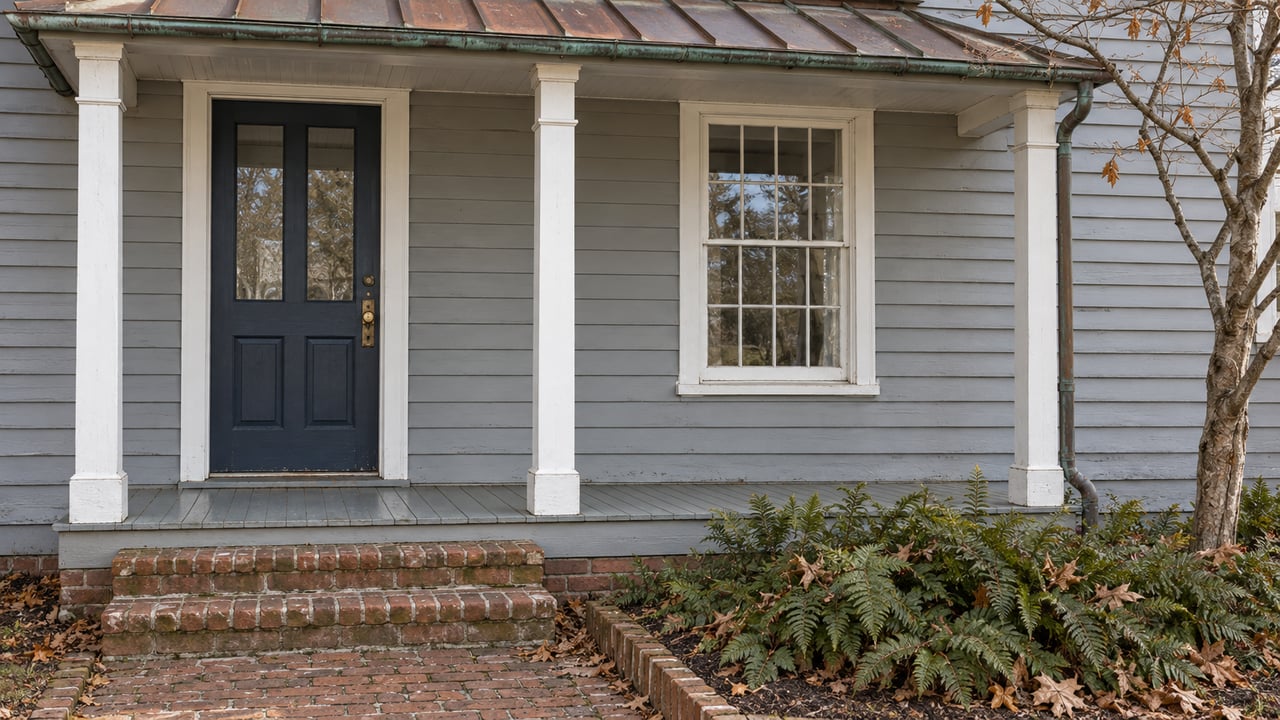
The Robert Morris Inn Is Facing Another Winter. What Can Oxford Actually Do?
October 22, 2026
The dining tables inside the Robert Morris Inn are still set with linens and silverware. Upstairs, the beds still have sheets on them. Cameron MacTavish described the building that way to WBOC. He is an architect with about 40 years in historic preservation and has lived in Oxford for two decades. In his account, the worst damage is a leaking roof over the tavern that brought part of a ceiling down.
Anyone who has walked down North Morris Street toward the ferry landing knows the inn has been dark. The open questions are who controls what happens next and how much time the building has. A federal bankruptcy case outside Oxford will decide who owns the inn, and the coming winter will test what shape it is in. The town's own role is narrower, and it comes down to how easy Oxford makes things for whoever eventually buys it.
The inn's decline is recent. In an earlier report, the Star Democrat reported a temporary restaurant closure for renovations. At the time, the Financier Chesapeake Bar and Grill hoped to reopen in November, with Hambleton House Events and Catering named as the incoming management team. In its more recent coverage, WBOC described the inn as closed for nearly a year.
The Town of Oxford's own record of what happened in between is precise. It appears in the January 13, 2026 commissioners' meeting packet:
| Date | What the town recorded |
|---|---|
| November 4, 2025 | First dangerous-condition notice posted at 314 N. Morris Street |
| November 24, 2025 | Inspection finds extensive ceiling damage from water intrusion and pooled water on the tavern floor |
| December 11, 2025 | First civil citation issued |
| January 6, 2026 | Second citation, second dangerous-condition notice, and a condemnation notice declaring the building an unsafe structure |
| Shortly after January 6 | Residents report a gas odor; the Oxford Fire Department finds extinguished pilot lights and shuts off the gas |
During that fire department visit, crews saw water actively leaking inside the building in dry weather, which pointed to a source inside the structure. The town then coordinated shutting off water, propane and electricity. Shutting off the utilities removed the immediate hazard. It also means the building has been without heat since January.
The bankruptcy began in the same month as the condemnation. WBOC reported that the property's lender moved to foreclose and the owner filed for bankruptcy protection, which put the foreclosure on hold. The case is in federal court in Washington, D.C. The property has also been offered for sale. The Star Democrat reported that it was being shown to prospective buyers, and WBOC put the asking price north of $3 million.
Set that figure against the town's finances. Commissioner David Donovan told WBOC that Oxford operates on a budget of roughly $2 million a year, so the asking price for one building is about one and a half times what the town spends in a year. Donovan, a retired attorney, also told the station that in his view the town would need a specific legal interest to justify joining a federal bankruptcy case as a party, and that showing up without one could backfire. He said those were his personal views and did not speak for the commission.
Buying the inn and steering the court are both beyond the town's reach. The September and October debates were about what Oxford can still do.
The pressure has come from a resident group called the Friends of the RMI. According to Talbot Spy's September 23 coverage, the group's September 8 letter to the commissioners lists its members as Al Sikes, Dick Deerin, Steve Tull and Cameron MacTavish. The letter argued that the bankruptcy should not become "a demolition event." Sikes urged the town to "assert itself in the bankruptcy proceeding."
Karen Wayland, who lives two doors from the inn, wrote separately with a different request. In WBOC's account, she asked the commissioners to commit to clearing regulatory hurdles for whoever buys the property, instead of pursuing town ownership or intervening in the bankruptcy. The Spy reported that her proposal also called for expedited town review for a qualified buyer and a citizen-led preservation effort. The commissioners said they supported drafting language but could not favor a particular buyer.
The proclamation the commissioners adopted at their October meeting follows Wayland's approach. Talbot Spy reported on October 14 that the town is now on record with the following:
State Sen. Johnny Mautz joined the discussion. He cautioned that state help would be limited until there is a workable redevelopment proposal and clearer ownership. He suggested that nonprofit ownership could open more funding sources, though that route could take considerably longer than finding a private investor. He agreed to contact the Maryland Department of Commerce and Talbot County's economic development director.
Donovan summed up the limits of the moment, as Talbot Spy reported. "I think we're getting the cart a little before the horse here," he said, noting that the sale and future ownership are largely outside the town's control.
With ownership tied up in court, the building's condition sets the pace. In September, according to Talbot Spy, MacTavish told the commissioners that the historic wing was in surprisingly good shape despite being vacant, unheated and under a leaking roof.
"It is not too late to save this building," he said, warning that "another winter with a leaky roof and no heat" could let mold spread and speed up the deterioration.
For a while, a fix looked close. WBOC reported that the bankruptcy court had authorized a roof repair that a local contractor could finish this fall. At the October meeting, Talbot Spy reported, Commission President Katrina Greer said that the court had permitted limited repairs but that the town had learned they would not go ahead for now.
That is the latest public word as November approaches. At the same meeting, Sikes raised the concern that continued deterioration could amount to demolition by neglect. He asked officials to consider putting the town's proclamation before the bankruptcy court.
The proclamation and the roof are connected. The proclamation is meant to attract a buyer, and a buyer is far more likely to appear while there is still a building worth restoring. Each month without a weathertight roof makes the restoration cost a buyer would face harder to predict.
Part of what is at stake is the inn's place in local history. The Star Democrat dates the building to 1710. It reports that an English trading company bought it in 1730 for its Oxford agent, Robert Morris Sr., and that Robert Morris Jr. joined his father in Oxford in 1747. The Caroline County Historical Society dates it differently. It describes the inn as incorporating parts of a "1774 Morris House," where Morris Sr. lived from 1738 until his death in 1750 while working as an agent for Foster Cunliffe & Sons. The two accounts don't agree on dates, and both leave the Morris family at the center of the story. MacTavish reminded WBOC that the younger Morris helped finance the Continental Army before the battles of Trenton and Yorktown.
The building's later uses are part of its history too. According to the Star Democrat, it served at different times as a boarding house, a general store and a temporary convalescent home for World War I veterans. It became a country inn in the 1940s, and the Gibson family owned it from 1971. Elizabeth Taylor and Walter Cronkite dined there, and James Michener outlined "Chesapeake" in the tavern.
That record of changing uses supports the idea behind the proclamation's "adaptive reuse" language. The building has changed purpose many times, and a viable future may not be a traditional hotel. At the October meeting, one resident warned that buying and rehabilitating the property could make a conventional hotel impractical.
MacTavish has pointed to two local precedents. In his account to WBOC, the Oxford Community Center and the building that now houses the Scottish Highland Creamery are both historic rehabilitations the town pulled off. Readers who know how Oxford hands its institutions from one generation to the next, a pattern we wrote about in Oxford's unwritten rule for passing things on, will recognize that history.
The town is also paying attention to its older storefronts more broadly. In an October work session, commissioners discussed $50,000 in state-funded commercial façade improvement grants. Applications came from the Oxford Inn, Pope's Tavern, the historic Odd Fellows Lodge and Sandaway, and commissioners showed interest in improvements near the entrance to town. No money had been allocated by the end of that session.
Historic buildings like the Robert Morris Inn are where my work most often turns to construction, condition and the question of what an old structure can realistically become. If you own or are weighing a historic property in Oxford and want a candid, local read on what it might take to preserve it, I'm glad to talk it through with you. Let's connect through Coard Benson.
Stay up to date on the latest real estate trends.


From waterfront properties and luxury homes to everyday residential transactions, you'll benefit from personalized service, local insight, and a commitment to delivering exceptional results every step of the way.