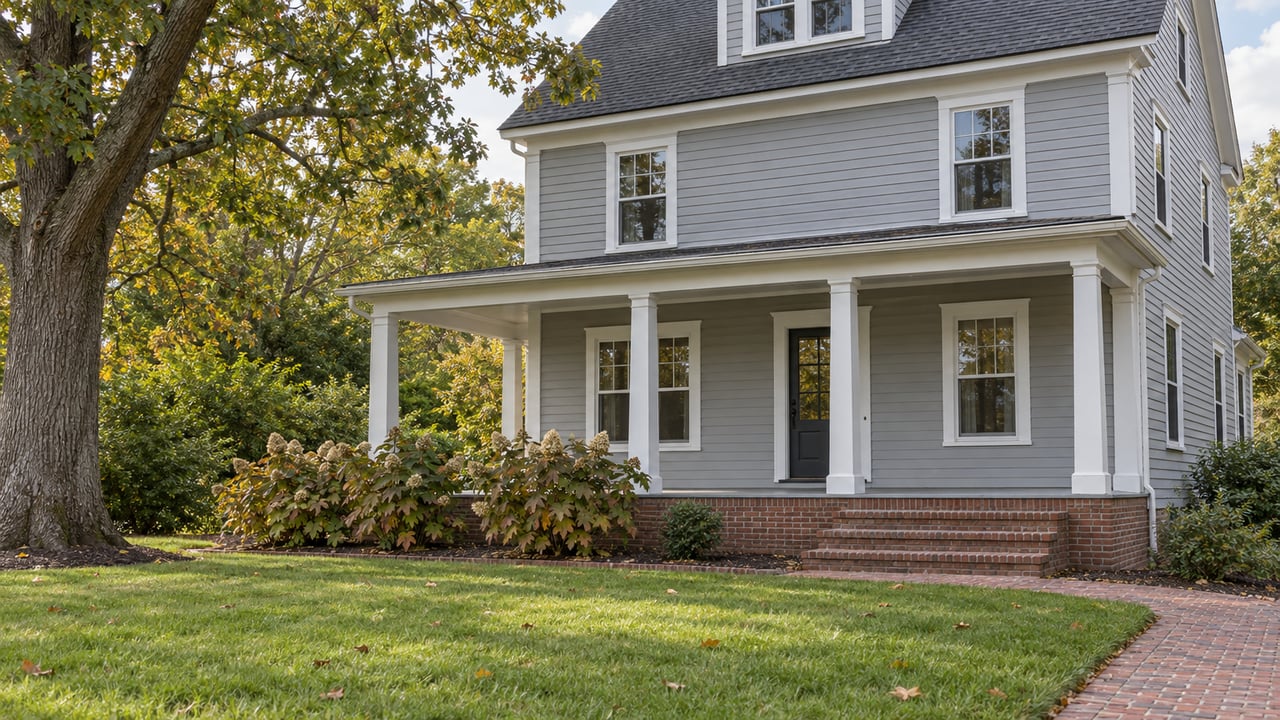
In St. Michaels, the Backyard Cottage Is Legal. Its Lease Isn't Written Yet.
October 15, 2026
"These ADUs are not necessarily helping for workforce housing. They could also be used as seasonal rentals."
A St. Michaels commissioner said that at the September 23, 2026 meeting, while the board was reviewing a draft rule for accessory dwelling units. The Talbot Spy reported that the draft would let an ADU be as large as 75 percent of the main house and would ease some local density and parking limits. The commissioners sent the draft to the Planning Commission by unanimous vote. They did not settle the question the quote raises.
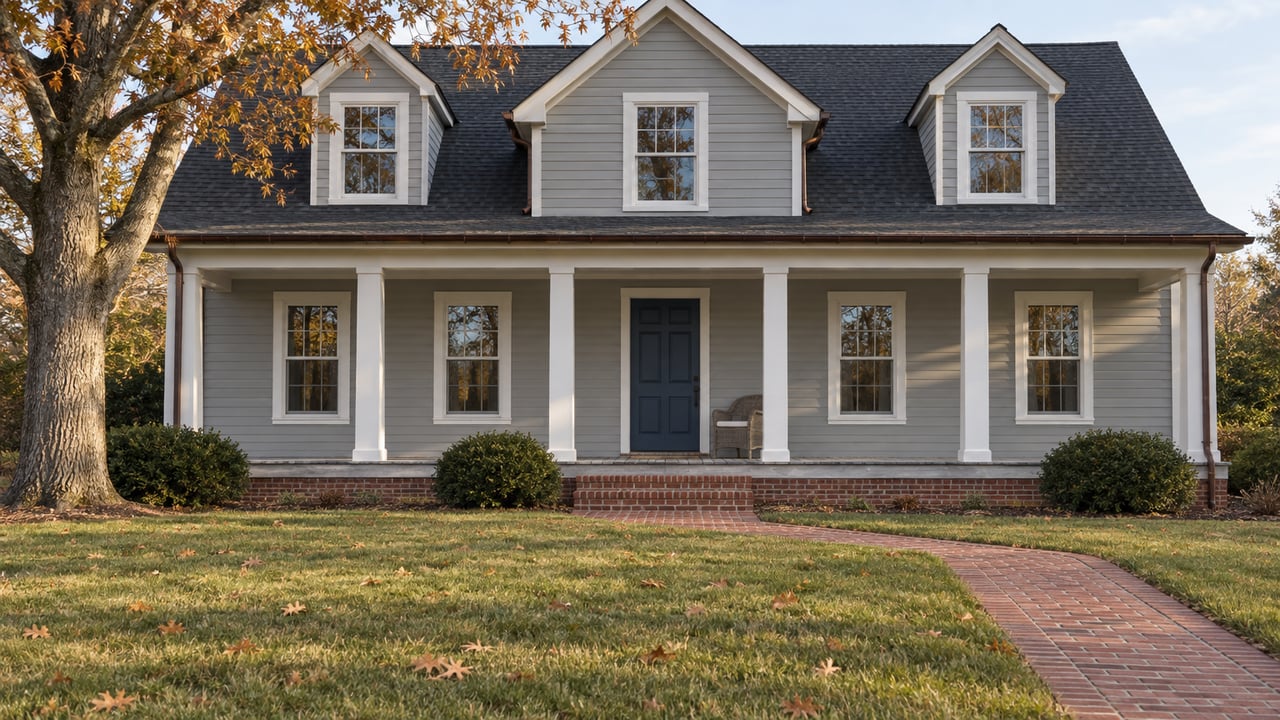
Maybe you're looking at a house in town with a deep lot, a carriage house or a garage that could hold a guest suite. If so, the open question is how you would be allowed to use a cottage once it's built. Maryland has mostly answered whether you can build one. St. Michaels decides who can live in it and for how long, and as of early October 2026 that rule was still in draft.
During its 2025 session, the General Assembly passed HB 1466. It took effect October 1, 2025, and it required every county and municipality with zoning authority to adopt a local law allowing ADUs on lots with a single-family detached home by October 1, 2026. St. Michaels has its own zoning authority, so the law applies to the town.
Much of what a buyer would want to know is now set at the state level. The Maryland Department of Planning's FAQ for local governments and the enacted bill text set the floor:
| Question | What state law and guidance say |
|---|---|
| How large can the ADU be? | Up to 75% of the main house. A local cap below that is not allowed. |
| Must the owner live on site? | The act imposes no owner-occupancy requirement. |
| Does it count against density? | ADUs are excluded from density calculations. |
| How much parking? | Generally no more than one space outside transit areas. Any additional requirement needs a parking study and a waiver process. |
| Can an HOA block renting it out? | HOA bylaws can't impose unreasonable limits on building or renting an ADU, but a limit on short-term rental doesn't count as unreasonable. |
| Who controls short-term rentals? | Local government. The act doesn't change that power. |
The St. Michaels draft follows the state ceiling on size. The town can't offer less than 75 percent, and the draft doesn't. That leaves the last row of the table, rental rules, as the place where the town still has real choices to make.
The department's FAQ answers the question in one line: "HB 1466 does not alter a local government's powers to regulate short-term rentals." St. Michaels already uses that power tightly. According to the town's short-term rental application, new short-term rentals and buildings converted to them need formal site plan review. They are allowed only in the Central Commercial district, and only on the second floor. The rules under § 340-73, last amended in February 2021, also require a town license, an on-site inspection, a two-person-per-bedroom occupancy cap and one parking space per bedroom. The town charges $350 for the first permit and $150 for each annual renewal.
Most single-family lots sit in residential districts. Under these rules, a cottage built behind one of those homes isn't eligible to become a nightly or weekend rental. Its rental use falls under the town's long-term rental category, and that definition is what the commissioners argued about.
The commissioner quoted above said the town's current definition of a long-term rental would let an owner rent an ADU for four months during peak tourist season. A four-month summer lease doesn't count as a short-term rental, but it serves the same visitor season.
The board discussed requiring nine- or twelve-month leases. Another commissioner pointed out that St. Michaels also has seasonal restaurant workers, interns and others who need housing for shorter stretches. So a longer minimum lease would aim at seasonal visitors, but it could also shut out people who work in town for a single season.
For a buyer, each version leads to a different use for the same cottage:
The draft went to the Planning Commission. The town's posted agenda for the Planning Commission's October 15, 2026 special session lists a continued rezoning application and general old business. It doesn't list the ADU ordinance by name. We found no confirmation of an adopted St. Michaels ADU law as of October 8, even though the state deadline was October 1. Buyers should ask the town for its current status.
The town's rules include one narrow route to short-term rental outside the second-floor commercial setting. As the application describes it, an existing single-family detached house can be licensed if it was built in or before 1945, has no more than 1,400 square feet, sleeps no more than four people and has short-term rental as its only principal use.
One condition matters here. The house must "be the only structure on the lot used for human habitation." As that wording reads, adding a habitable cottage to one of these lots would conflict with the exception the lot relies on. If a property you're considering already operates under this exception, its rental status and any plan to add an ADU are tied together. The town's planning office can say how the two would interact under whatever ordinance is finally adopted.
The town's housing goals came up again at an October 1 Planning Commission meeting over 100 Mulberry Street. It's a three-apartment building in the R-2 residential district that has been used as apartments for decades and is now a legal nonconforming use. The Talbot Spy reported that Chairman J. Douglas Rollow said the units rent for $1,600, $1,800 and $2,000 a month and count as workforce housing under the town's Comprehensive Plan.
The owner wanted Central Commercial zoning so that renovation would be easier to justify. Rollow's concern was that commercial zoning could eventually allow the building to stop being housing. "If it's not housing, it's not workforce housing," he said. The commission took no final action and will send a written report to the Town Commissioners.
The same officials who will finish the ADU rule weighed housing against commercial flexibility here and leaned toward keeping the housing. Those monthly rents are also the only local figures in the public record that show what workforce-housing rent means in St. Michaels right now. A year-round tenant in a backyard cottage would be part of that same rental market.
At the same September 23 meeting, Town Manager Don Richardson noted that St. Michaels still relies heavily on a historic-property inventory completed in 1986. He said inconsistencies between the town code, the historic district boundaries and the Historic District Commission's guidelines open the door to mistakes. He said expanding the district "is not the objective." The commissioners asked staff to come back with the possible cost, scope and timeline of a new inventory instead of approving one.
At the state level, the department's FAQ says HB 1466's limit on restrictive covenants doesn't apply to properties listed on, or eligible for, the National Register of Historic Places. The Maryland Historical Trust recommends that local governments apply the Secretary of the Interior's Standards for Rehabilitation when adding density in historic neighborhoods. For a cottage in or near the historic core, the design approval process may matter as much as the zoning permission.
Each town sets its own rules within the state minimums. Easton's own ADU zoning-update page says its existing "granny flat" rules required the owner to live in the main house and capped ADUs at 900 square feet. A public comment dated August 19, 2026 said proposed Ordinance 861 was before the Town Council. Its final form wasn't confirmed in our research. A buyer comparing a cottage-ready lot in Easton with one in St. Michaels is comparing two different rulebooks, and both are changing this fall.
There's also time to check these questions before signing a contract. Bright MLS figures published by Maryland REALTORS show Talbot County had 241 active listings and 4.7 months of inventory in August 2026, down from 276 listings and 5.9 months in August 2025. Supply is tighter than a year ago, but the market isn't moving so fast that a question to Town Hall can't be answered before an offer.
Our buyer resources cover how these questions fit into a contract timeline.
Can St. Michaels require me to live on the property to build an ADU? HB 1466 doesn't impose an owner-occupancy requirement. The state's model ordinance guidance treats one as an optional local policy. The St. Michaels draft, as reported, didn't mention one.
Can an ADU in a residential part of town be listed as a nightly rental? Under the town's current rules, new short-term rentals are allowed only in the Central Commercial district, on upper floors, apart from the narrow pre-1945 house exception.
Does a property already marketed with a guest cottage fall under the new rules? That depends on how the town treats existing units in its final ordinance, which hadn't been confirmed as adopted as of October 8, 2026. The town's planning office is the place to ask about a specific address.
If you have a St. Michaels property in mind and want to know what its cottage, carriage house or open back lot could legally become, Coard Benson can walk the lot with you, check the zoning district and keep track of the ADU ordinance as it moves from the Planning Commission back to the Town Commissioners. Let's Connect.
This article is general information, not legal, tax or financial advice. Consult a qualified professional about your situation.
Stay up to date on the latest real estate trends.
From waterfront properties and luxury homes to everyday residential transactions, you'll benefit from personalized service, local insight, and a commitment to delivering exceptional results every step of the way.